 EN

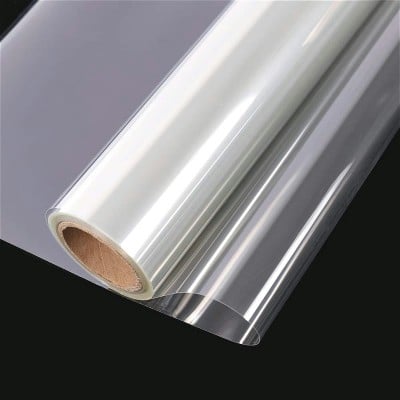
Cold Lamination Film: Protecting Prints Without Heat
A cold lamination film is a protective overlay applied to a printed surface at room temperature, using pressure rather than heat to bond it. For anyone printing on vinyl, banner material or synthetic paper, it answers a simple problem: the print needs protection, but the material underneath will not tolerate a hot press. This note explains what the film does, which finish to choose, and what to confirm before ordering.
Why the "without heat" part matters
Heat lamination bonds a film to a print by melting an adhesive layer, which means the printed material passes through a heated nip roller. Printed vinyl, banner stock and synthetic paper are all sensitive to that treatment: heat can distort the sheet, soften the coating, or shift registration on a long run.
Cold lamination avoids the heat entirely. The film carries a pressure-sensitive adhesive and is bonded by pressure alone, so a printer can protect a job that would otherwise be at risk. That is the practical reason the process exists, and it is the reason it is the usual choice for digitally printed wide-format work rather than a niche alternative.
The four finishes we supply
Our cold lamination film range covers four finishes: gloss, matte, frosted and clear.
- Gloss deepens colour and adds surface reflectivity. It is the usual pick when the print is meant to look saturated and vivid.
- Matte removes reflection. It suits viewing conditions where glare is a problem and where a quieter, non-shiny surface is preferred.
- Frosted gives a diffused, softly textured surface rather than a mirror finish, useful where a distinct look is wanted without losing protection.
- Clear is the neutral option: protection and durability with minimal change to the print's appearance.
These four are the finishes named in our published range description. Nothing in that description fixes a thickness, an adhesion value or a service-life figure for the range, so treat the list as a finish menu rather than a performance specification.
What protection actually buys you
The reason to laminate is not cosmetic. A printed surface on a vehicle, a container, a sign or a banner is exposed to handling, cleaning, abrasion and weather. An unlaminated print takes that wear directly on the ink layer.
Our product documentation is consistent on this point: for digitally printed vehicle film and for container decal film, the published recommendation is to apply a protective film over the print to extend service life. That statement is about the printed graphic as a system, film plus print plus protective overlay, not about the base film alone. Planning the overlay into the job from the start is cheaper than adding it after a reprint.
Where cold lamination jobs usually go wrong
Because the bond is made by pressure, the quality of the result depends heavily on application discipline. Three things decide most outcomes.
First, the surface must be clean and dry before the film goes down. Dust trapped under the overlay is permanent, and on a gloss finish it is immediately visible.
Second, trapped air is the main defect. A liner with air release channels gives the applicator a path to work bubbles out toward the edge instead of chasing them across the sheet. Where the liner has no such channels, the same job needs more care and a slower pass.
Third, pressure has to be consistent. A hand squeegee works for small panels; a roller laminator gives a more even result on long runs. Uneven pressure shows up later as edge lift or hazy patches, not immediately.
What to confirm before you order
Ask for the specification of the exact finish you are considering, not for the range as a whole. Thickness, adhesive description and liner type are the three values that most affect how the film handles on your equipment, and they should come from the current data sheet rather than from the finish name.
Tell us the print process, the substrate, the panel width you need to cover and whether the finished graphic will be used indoors or outdoors. Customisation across our range can cover film thickness, adhesive type and colour, liner grammage, roll dimensions and printed branding on the liner or carton, so a specification can be matched rather than approximated. Standard lead time is 3 to 5 days for regular products and 7 to 10 days for customised orders, shipped from our Shanghai warehouse.
If you are protecting a printed run and want to compare finishes, send us the substrate and the intended use, and ask for a sample of the finish you are considering to test on your own press before committing to a roll.