 EN

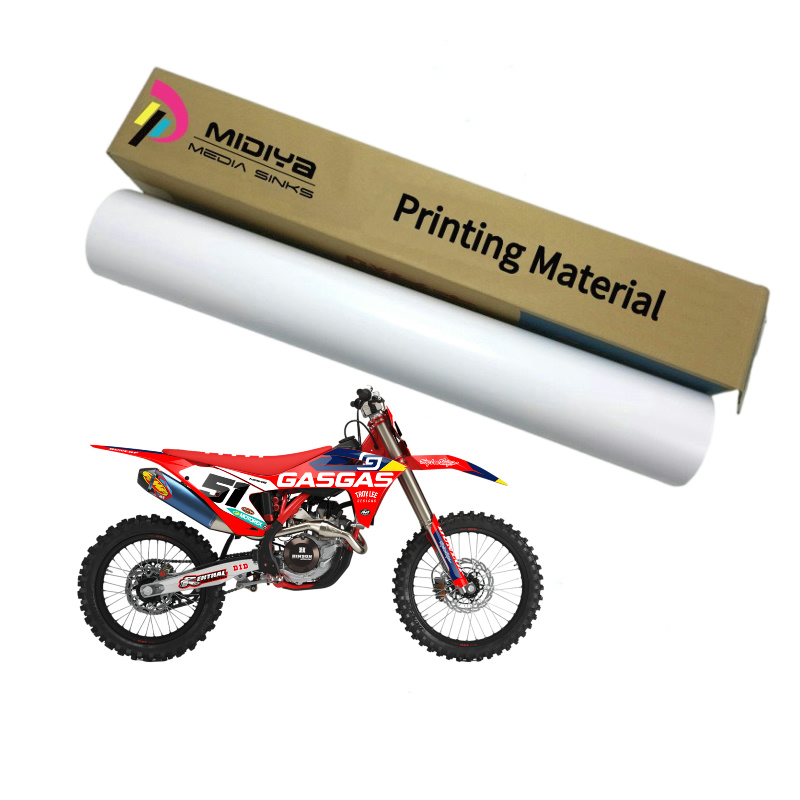
High Tack PVC Vinyl: What It Means and When to Use It
Buyers often ask whether high tack vinyl will hold on a steel container or a trailer panel. The honest answer starts with a clarification: high tack is a naming level inside a product family, not a published measurement. Once that is clear, the choice becomes practical.
What high tack actually describes
In our naming, adhesive type is written in two parts. The first part is the tack level: ultra high tack, high tack, or low tack. The second part is removability: removable or permanent. A high tack removable vinyl therefore sits at the upper end of the tack scale while still being specified to come off again.
What the name does not give you is a number. We do not publish peel force or shear values for these levels, and the naming structure alone cannot be read as a performance ranking. Two products both called high tack can behave differently once the film, the liner or the adhesive coat weight changes. The label narrows the family. The specification sheet and a physical sample settle the rest.
There is a parallel naming habit worth knowing. Some transit products are named by adhesive colour instead of tack level, for example grey glue removable. That is a second naming system, not a fourth tack level.
Where high tack earns its place on containers and trailers
Container bodies and trailer panels are demanding substrates. They are large, often corrugated, frequently dirty, and exposed to weather. A vinyl that lifts at an edge early is a rework cost, not a material saving.
Our container decal vinyl is the high tack removable grade. Published applications include container bodies, smart parcel lockers, refrigerator panels and game machine wraps. The stated selling points are a durable face film that resists cold and corrosion, an aggressive adhesive that resists edge curl, edge lift and delamination, and a flat liner with air channels that helps installers work out bubbles.
Trailer graphics follow the same reasoning, with one caveat. Our published material names containers, lockers and appliances rather than trailer panels, and trailer substrates vary in alloy, paint and rivet pattern. Confirm the actual substrate with the supplier before committing a full wrap.
Why removability is a separate decision
High tack and removable are often treated as opposites. They are not. They answer two different questions: how hard the adhesive grabs, and whether the graphic is expected to come off at some point.
For a container that will be rebranded, a removable grade is the sensible choice. For a permanent fleet livery, a permanent adhesive is the correct pairing. Choosing the tack level without deciding removability is how buyers end up with graphics that either release too early or cannot be taken off when the contract ends.
Our vehicle vinyl series covers both halves of the naming. The high tack series is produced in widths of 0.914, 1.07, 1.27 and 1.52 m in 50 m rolls, and is aimed at indoor and outdoor advertising and barrier gate panels. The container decal grade runs in widths of 1.27, 1.37 and 1.52 m by 50 m.
Details that decide whether the install goes smoothly
- Liner and air channels. A flat liner with air channels is the difference between a squeegee job and a bubble chasing job on a corrugated panel.
- Roll width. Match the widest panel you need to cover without a seam. Wider rolls reduce joints, and joints are where lifting usually starts.
- Cold and corrosion. Container work often means coastal air and winter installation, so face film resistance matters as much as adhesive strength.
- Customisation. Film thickness, adhesive type and colour, liner weight, roll specification and logo printing can all be adjusted, so a specification can be matched rather than approximated.
What to confirm before you order
Ask for the specification sheet for the exact grade, not for the family. Ask for a sample and test it on a prepared offcut of the real substrate. Check the roll width against your largest panel. Check the removable or permanent choice against the service life you expect. Then confirm the commercial terms and the production schedule in writing with the sales contact.
If you tell us the substrate, the panel size and whether the graphic will ever come off, we can point you to the right grade and send a sample for your own test.